Every time food is eaten, a process begins that most people never think about — and yet it involves multiple organs working in a precise sequence to extract what the body needs and discard what it doesn’t. The digestive system sits at the centre of this, breaking food down into nutrients that fuel energy, support growth and keep everything functioning. Students learn more than just biology facts when they understand how this works because it directly relates to the importance of healthy eating habits and how the body reacts to them. This subject helps students in understanding the relationship between science and everyday life.
How Your Body Processes Food After You Eat?
The moment food enters the mouth, it begins a journey through a series of organs that break it down, extract what the body needs and move everything else along. Nothing about the process is instant — each organ plays a specific role in sequence, and everything only works properly when all of them do their part. Understanding this helps students connect what they eat to how they feel — and that connection is what makes biology worth paying attention to. At a school in Nagpur, topics related to the human body are often connected to everyday habits, helping students understand the importance of healthy choices.
The Hidden Work Your Mouth Does Before Digestion Starts
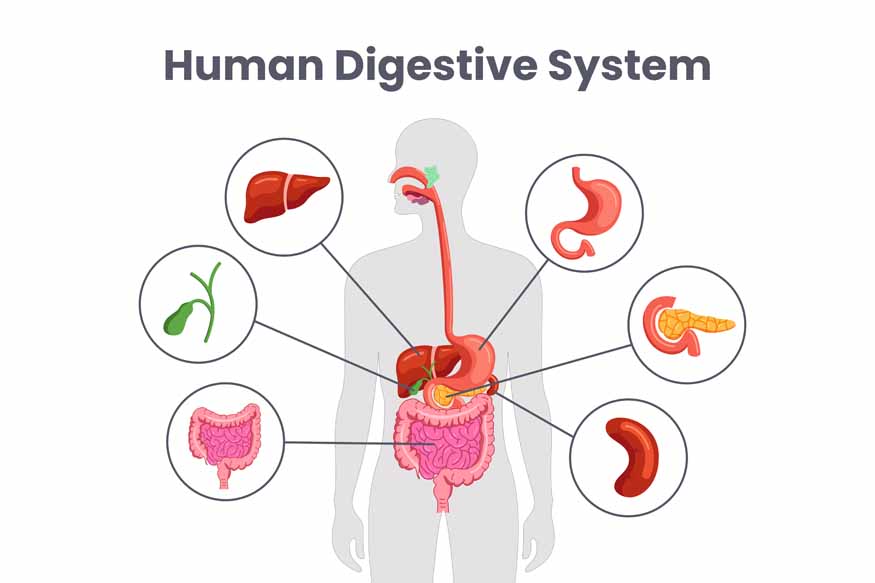
As soon as food enters the mouth, digestion begins, not in the stomach. Teeth break food into smaller pieces while saliva begins the chemical process of breaking it down further. This early stage matters more than most people realise because it sets up every organ that follows. When food isn’t chewed properly, the rest of the body has to work harder to compensate. At a top schools in Nagpur, students are encouraged to understand these connections — because knowing how digestion actually starts can change something as simple as how carefully a person eats.
How Food Travels Without Falling Back in the Body?
It appears easy to swallow, but there’s more going on than that. The oesophagus takes over after food exits the mouth; its muscles contract in waves to push food steadily and exclusively in one direction into the stomach. Every stage of good digestion is made possible by this accuracy. Students gain a fresh understanding of how the digestive system is purposefully built when they understand how the body handles something so natural.
The Acid Chamber Inside Your Stomach Explained Simply
Beyond only storing food, the stomach actively processes it. Strong acids destroy dangerous microorganisms that may have entered the food while breaking it down into smaller pieces. It’s a stage that matters as much for safety as it does for digestion. Understanding how the stomach manages both is part of what makes human biology practical rather than just theoretical — and it’s a concept that finds its way into science learning from the CBSE school admission stage onwards.
Understanding the Small Intestine’s Dietary Absorption
By the time food reaches the small intestine, most of the hard work of breaking it down is already done — now comes absorption. The small intestine is designed specifically for this, with a surface area large enough to draw out vitamins, minerals and energy from food efficiently before passing the rest along. This stage matters more than most people realise — digestive health depends on how well the small intestine does its job, because without proper absorption the body doesn’t actually benefit from what’s eaten. Understanding this early in science education gives students a clearer picture of why what they eat matters — not as general advice, but as something they can see happening inside their own body.
Role of the Large Intestine in Absorbing Water from Food
Once the small intestine completes its function, the remaining material moves into the large intestine, where water is absorbed and the leftover waste is prepared for removal from the body. It’s a step that’s easy to overlook but important for hydration and healthy digestion. At a top school in Nagpur, students learn to see even this final stage as part of a well-organised system — because how the body manages waste is just as worth understanding as how it absorbs nutrients.
How Digestive Enzymes Break Down Food?
Digestion doesn’t happen through muscle alone — enzymes do much of the chemical work. These proteins speed up the breakdown of food into molecules small enough for the body to actually use, and without them the digestion would struggle to process even a simple meal. Each enzyme targets something specific — carbohydrates, proteins, fats. At a school in Nagpur, understanding how enzymes connect chemistry and biology gives students a clearer picture of how student health is rooted in processes happening at a molecular level.
The Importance of Gut Bacteria in Digestion
The digestive system does not work alone — millions of bacteria living in the gut play an active role in breaking down food and keeping harmful germs in check. This internal ecosystem is surprisingly sensitive, and what a person eats directly affects how well it functions. Maintaining good health depends largely on diet, which is why the connection between food choices and gut bacteria is worth understanding early. This concept is introduced in science learning at an early stage, helping students build a foundation for understanding their own biology.
How the Liver and Pancreas Support Digestion?
The liver and pancreas don’t get much attention but they’re doing significant work behind the scenes. The liver produces bile to break down fats while the pancreas releases enzymes that handle carbohydrates and proteins. Neither organ makes contact with food directly, yet healthy digestion wouldn’t be possible without both. It’s a good example of how the digestive health depends on coordination — different organs, different roles, all working at the same time to keep the process running smoothly.
Why Chewing Food Properly Affects Digestion Speed?
Chewing properly is one of those habits that seems too simple to matter — but it does. Breaking food down thoroughly before swallowing reduces the workload on every organ that follows and prevents the kind of discomfort that comes from rushing meals. It’s a small habit with a surprisingly large impact, especially on busy days when eating quickly feels like the only option.
Common Myths About Digestion Explained
Some common beliefs about digestion simply are not true. For example, drinking water during meals does not harm digestion, and the body continues to process food even while we sleep. Clearing up misconceptions like these helps people make better choices about food and daily habits. Learning the facts behind how the body works encourages a better understanding of health and helps students build accurate scientific knowledge from an early age.
Everyday Habits That Influence How Your Digestive System Works
Eating on time, staying hydrated and cutting back on junk food are habits that seem straightforward but make a genuine difference to how the body feels and functions. Over time these choices shape student health in ways that show up in energy levels, concentration and general well-being. If you visit CBSE Schools in Amravati Road, you will often find students learning how everyday habits contribute to better health and well-being. Visit our blog digestive system overview to know more about the same.
FAQs on the Digestive System
1. What does the digestive system do?
It breaks food into nutrients and energy the body can use.
2. Where does digestion begin?
It starts in the mouth with chewing and saliva.
3. Why is the stomach important?
It uses acid to break food into simpler forms.
4. Where are nutrients absorbed?
Mostly in the small intestine.
5. How can we keep digestion healthy?
By eating properly, drinking water, and avoiding junk food.
Conclusion
The digestive system runs continuously — processing food, pulling out nutrients and managing what the body doesn’t need, all without any conscious effort. What does require effort are the habits that support it — eating balanced meals, chewing properly, drinking enough water. Students who understand how digestion actually works tend to make better daily choices, not because they’ve been told to but because the reasoning makes sense to them. That understanding also gives future science topics a foundation that’s already in place.
Learning at Centre Point School, one of the reputable CBSE schools in Amravati Road, goes beyond textbooks as students investigate subjects in interesting and hands-on classes. Students gain a deeper understanding of health and wellness while making connections between scientific ideas and real-world situations. The school contributes to the development of a solid academic foundation by promoting curiosity, critical thinking, and experiential learning. Enquire Now to find out more about the school’s programs and the CBSE school admissions procedure.